


 moq.pro
Distribution
Sub-second latency at CDN scale, with every viewer choosing its own buffer—and an HLS gateway so legacy players migrate one at a time.

Why MoQ
open standard · QUIC
Skip, don't Buffer
Groups ride independent QUIC streams, newest first. Congestion costs a skip instead of the spinny boye, while audio outranks video so sound stays continuous.

Pick Your Latency
On the same broadcast, a bettor waits 100ms and a couch viewer waits 10s—one protocol and one relay instead of HLS plus WebRTC.

Renditions on Demand
Switch ABR renditions at any group boundary, add new tracks to the live catalog mid-broadcast, and only transcode the rungs viewers actually pull.

Fan Out
Relays merge subscriptions, route across clusters by shortest path, and interoperate across CDNs like moq.pro and Cloudflare.

Keep Your HLS
Hang carries CMAF, and the HLS gateway serves any broadcast as HLS from the relay's cache so existing players keep working while you migrate.
How it works
Read the docs →
No head-of-line blocking
Conventional segments queue behind TCP stalls and freeze playback. MoQ prioritizes the fresh group on a new QUIC stream and drops the stale one past your deadline.
Skip past congestion instead of staring at the spinny boye.
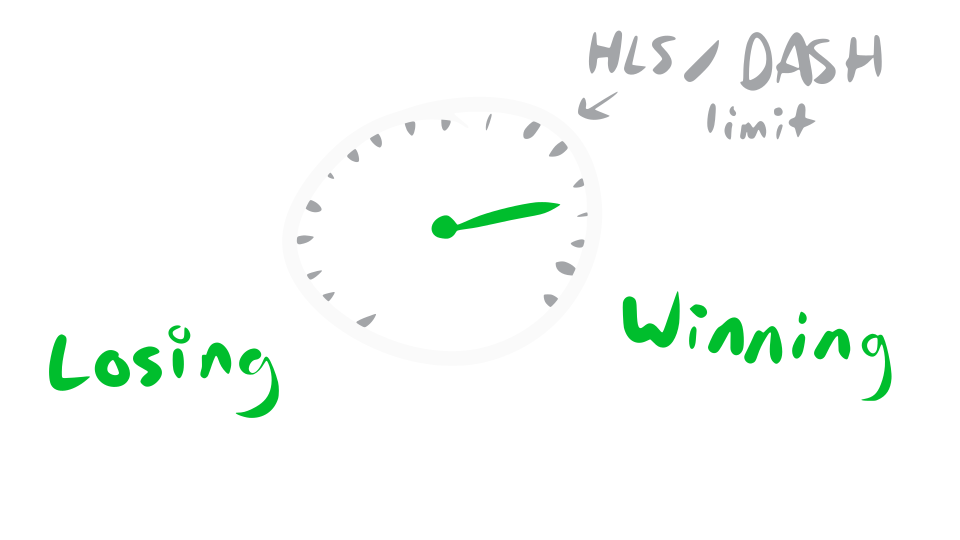
One stream, every latency tier
A subscription asking for a 10s buffer behaves like HLS; one asking for 100ms behaves like a video call. Same relay, same broadcast.
The viewer controls the buffer, not the segment duration.

Dynamic renditions and live catalogs
Viewers subscribe to the catalog first, then pull only the video and audio tracks they need—switching at any group without waiting for a segment boundary.
Transcode and deliver only what people watch.
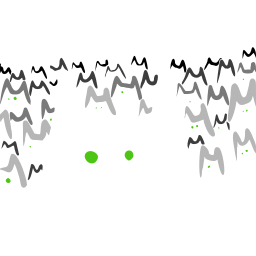
CDN-scale fan-out
HTTP/3 CDNs already run production QUIC stacks, so relays merge millions of viewers into a single origin stream with HTTP's caching economics.
One origin stream, millions of viewers.
Yours?
Replacing HLS or DASH in production with MoQ? Tell us, we'd love to brag about it.