
July 14, 2026 · kixelated
A Modern Interpretation of Live Streaming in the Cars 2 Cinematic Universe
sup
This is an unexpected collaboration with Fastly. They liked the MoQ blog posts and actually sponsored me to make a hinged version, cross-posted to their OFFICIAL BLOG. Go read that one instead if my usual cringe is too much.
Roses are red. 🌹 Sports cars be too. 🚗 MoQ be fast. 🚀 Cars 2™ is a 2011 American animated comedy film produced by Pixar Animation Studios for Walt Disney Pictures.
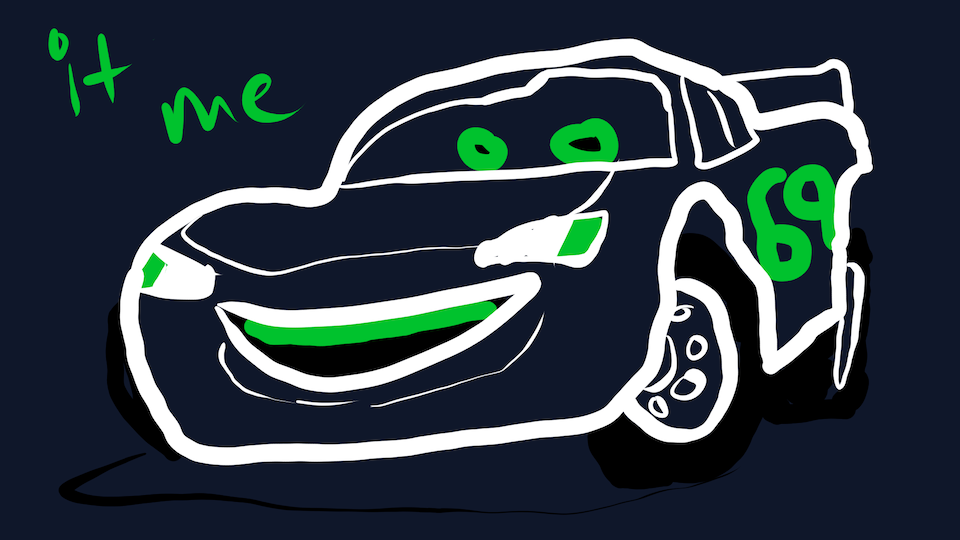
Cars 2: Electric Boogaloo
Lightning McQueen is racing around the track. The spectators in the stands are honking wild. HONK HONK
But we don’t care about the stans in the stands. We care about the cars in their garage? The ones willing to pay big bucks if we can transmit the LOUD CARS DO CIRCLES race over the internet. Or whatever currency cars use, IDK I’m not a lore expert.
The answer for the last decade has been HLS/DASH. Split the media into fragments, anywhere from 0.5s to 4s long, and serve them over HTTP. It’s boring but it works.
But just like the Mini Cooper, there are a few short-comings.
- Flushing media in batches adds latency (0.5s to 4s).
- Network congestion causes head-of-line blocking and the spinny boye.
- Every second of the spinny boye means even more latency.
This is why I created MoQ while at Twitch. The goal was to make live streams more interactive (and less boring). Stream frames, and occasionally drop instead of blocking.
High latency is for losers. I always finish first, just like Lightning McQueen.
MoQ for the Fans
First, I wanted to address the SUV in the room. My previous blog post, You Don’t Need It, mentioned that you don’t need MoQ for high-quality content. It’s true, but as always, there are exceptions to my shitty opinions.
But before we disprove one shitty opinion, we need to prove another. Racing is boring.
The video footage is so boring that the only thing separating two laps is a counter. Like yes, sometimes the car goes boom, but there’s so much dead air. I postulate that you’re watching to be part of the story LIVE, not to see every millisecond of lap 392 in the Toilet Bowl 500.
And it might actually be a good use-case for MoQ. Because instead of buffering/pausing to load boring content, we can instead skip it to keep latency low. It keeps you in the action with sub-second latency. And milliseconds might be the difference between winning and losing.
FUN FACT: Sports betting prediction markets are a thing. Degenerate users love lower latency.
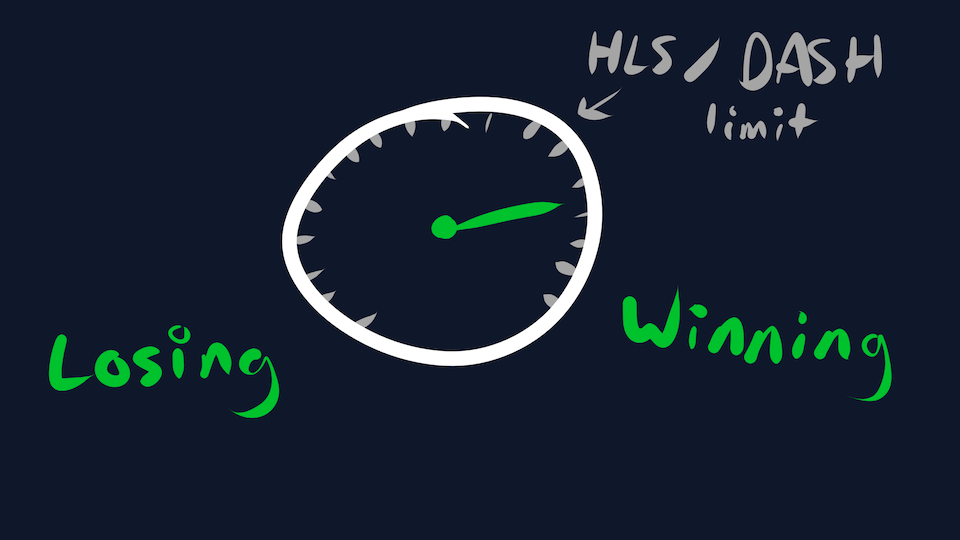
And before you get your suspension in a twist, MoQ can still provide the same quality/latency you expect from HLS/DASH. We just lower the latency floor for the Lightning McQueens out there who want to WIN.
MoQ for the Cars
I originally made MoQ for the fans. But people keep running my code on the cars. Or the boats.
TBH, this is the better use-case for MoQ.
You might have pieced together that I don’t watch racing (boring) outside of critically acclaimed movies for children. Starring Lightning McQueen and his goofy comrades, the cars go fast vroom vroom. But when I do see snippets of F1, the camera feeds from the cars are awful.
Me, the uninformed dumbass, has a hunch that it’s due to networking. There’s going to be deadzones or interference or whatever around the track. We are bound by the laws of physics, even in the Cars 2 Cinematic Universe.
We no can send all bytes. - Lightning McQueen (2011)
Boring protocols like RTP drop packets/frames based on SLAs. The publisher gives up (re)transmitting a frame after ~100 milliseconds; then it’s gone forever. This often shows up as artifacting or tearing or frozen video.
But the chad protocol doesn’t give up.
MoQ publishers prioritize transmitting the newer stuff (in dependency order). The old stuff gets queued in RAM (up to a TTL). When bandwidth recovers, we can backfill old footage instead of losing it forever.
Each MoQ subscriber independently decides how long to wait for each frame:
- The live stream might wait for up to 1 second
- The instant relay might wait for up to 10 seconds
- The VOD recording might wait for up to 1 minute.
So your real-time feed might be lossy af, but the VOD is pristine.
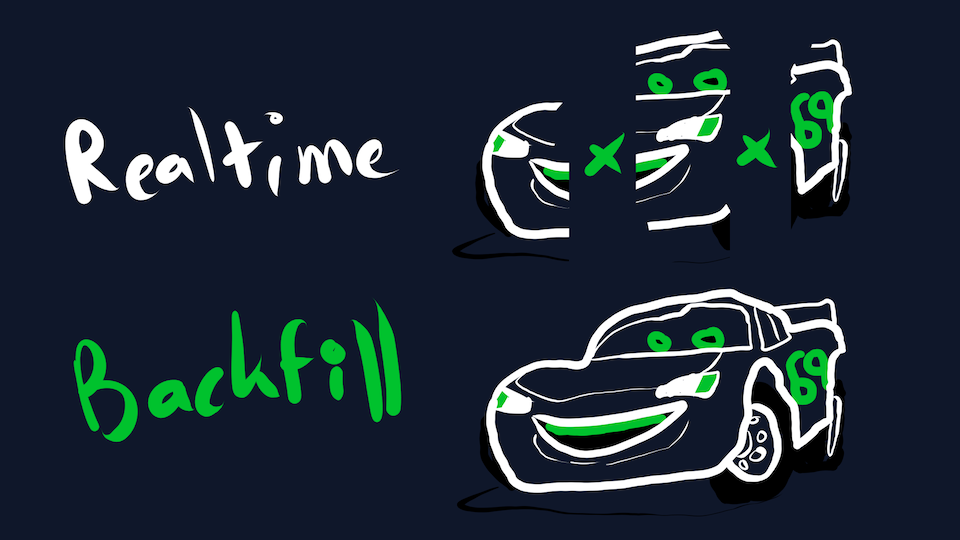
The packets may have given up. But Lightning McQueen never gives up. He always finishes first and the crowd goes HONK HONK.
MoQ for the Robots
We’re closer to the Cars Cinematic Universe than we want to admit. Humans are a dying breed. Like a pug on a hot day. RIP us.
Enter the robots. They byte. And they need networking for their bleeps and bloops. It turns out that MoQ works for more than just media:
- The speedometer? A live stream.
- The steering wheel? A live stream.
- The G force sensor as Lightning McQueen heroically crashes into a wall to save the day? A live stream.
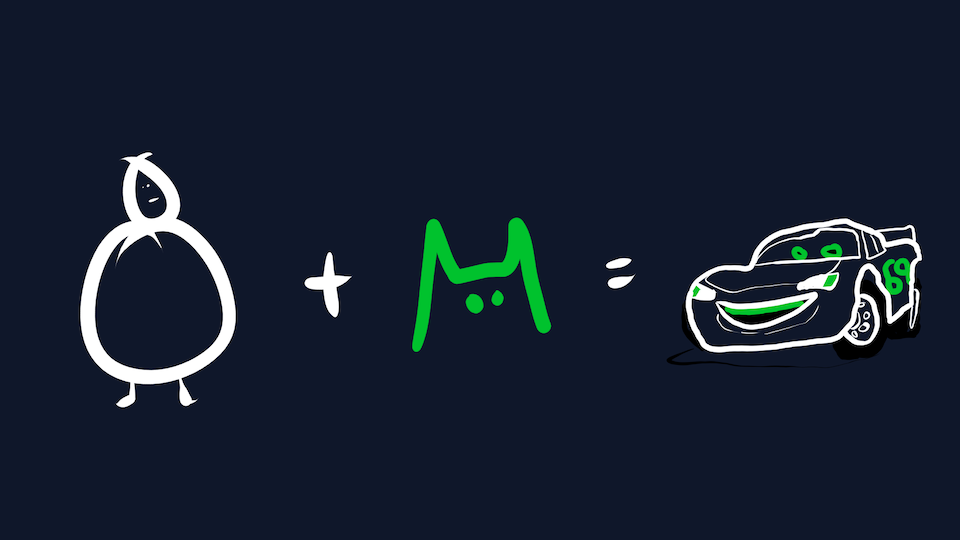
Seriously, there’s nothing special about media. It’s just delta encoded data. You can delta encode a lot of things, even JSON. Just like I delta encoded your mom last night.
<current_year>
Networks aren’t infinite. So we split up media into tracks/groups/frames/packets so pieces can be dropped when needed. The reality is that some bytes are just less valuable than others. We can’t all be Lightning McQueen.
The hard part is putting humpty back together. That’s why we use timestamps baybee, they tell us when stuff happened relative to other stuff. So do the same thing for metadata. Stamp that fellow, using the same clock as media, and send it over the same pipe.
You can, and should, take the red pill and use MoQ for EVERYTHING.
A single cooperative QUIC connection with: controls > audio > metadata > video
FUN FACT: MoQ is already being used remotely to pilot drones over Starlink. One day we’ll be able to remotely drive Lightning McQueen.
And yes, this sounds simple but it’s something WebRTC completely botches. You have to use a separate connection for metadata and timestamps aren’t exposed in the browser.
MoQ for the Track
We’re not done yet. Sit back in your seat. Fasten that seatbelt. It’s the law, and I’m the sheriff from the critically acclaimed movie Cars 2.
Yeah I know the joke is overdone. Give me a pit-ty chuckle, we’re almost done.
If more than one broadcast studio wants footage of Lightning McQueen’s tailpipe, we don’t want to transmit multiple copies. Our satellite truck is expensive and has a limited bandwidth budget.
And what if none of the broadcast studios actually want that hot, smokey, tailpipe footage? Do we even want to transmit it, or is it just a waste of bandwidth? With all of this data swirling around the track, there has to be some way to organize it.
Enter stage right: moq-relay
It’s a simple proxy that connects 1 publisher with N subscribers (per broadcast/track). When moq-relay instances connect to each other, they automatically form a cluster. It handles discovery, routing, and proxying.
You can host it yourself and/or pay me. For example:
- Lightning McQueen connects to a self-hosted moq-relay at
192.168.420.69. - moq-relay is run with
--cluster-connect https://cdn.moq.pro/cars2. - Studio clients (or a relay!) connects to
https://cdn.moq.pro/cars2.
Just like a tinder hookup, there’s a match and now you’re the sub. Any broadcasts published by Lightning McQueen are automatically available to all relays, potentially proxied through multiple hops.
And only one copy is ever transmitted between each moq-relay instance, regardless of the number of downstream subscribers. This is known colloquially as “big deal” when flakey venue internet and expensive satellite trucks are involved. Run a self-hosted relay at each track, aggregate all of the feeds automatically, and publish them to a CDN.
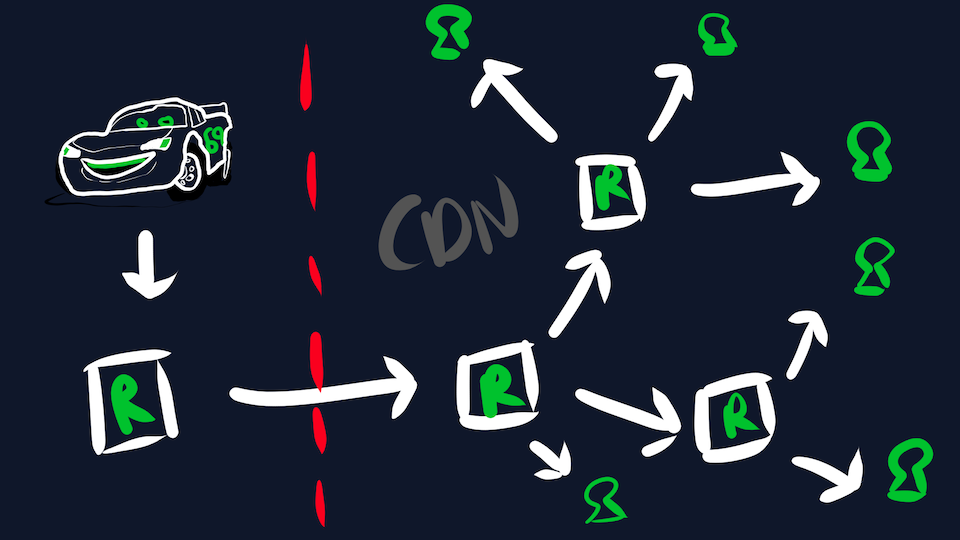
And there’s no limit to the number of connections you can establish.
moq-lite routes each subscription over the shortest path.
Go ahead, connect to cdn.moq.pro and cloudflare.mediaoverquic.com at the same time; they sit idle until someone subscribes.
It’s like swiping right on Lightning McQueen multiple times on alt accounts. Don’t judge.
Disclaimer
I hope you’ve realized by now that I haven’t seen the critically acclaimed movie Cars 2. That poster of Lightning McQueen on my wall is just part of the gag. I stare at it quite often to keep up the ruse.
Thanks again to Fastly for sponsoring this post. They just told me to write something about MoQ, so I did. No refunds.
If you’re interested in more Cars 2 lore, join the fan club or email me at me@kixel.me.